


GREEN CHOICES: A SHALE DECISION
Green Choices was a website focusing on a research initiative developed by Professor Susan Christopherson at Cornell University during 2010-2014. It provided information to public officials and communities about the costs and benefits of shale gas development. The original Green Choices site is recreated here so that students, researchers, policymakers, local officials, and community members can continue to access and learn about the economic, social, environmental and policy choices behind energy development.
Shale Gas & Oil Development
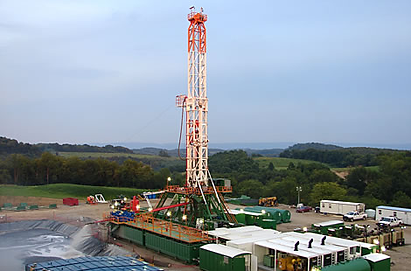
Public policymakers, the media, and the public have been promised job growth and local prosperity in return for assuming environmental risks from shale gas and oil development. Beginning in 2010, a Cornell research team delved into the full range of economic impacts, including the costs as well as the benefits, to give public officials and citizens a more realistic picture of the consequences of shale gas extraction. The second phase of the project, conducted throughout 2012 and 2013, focused on local government responses to shale gas development pressures. The last phase of the project explored the job creation resulting from shale development, the "footprint" of shale development nationwide, and crude oil transport issues.
Resource Technologies Corporation
The Green Economy, Green Jobs, Clean Tech - we've all heard these terms. We are excited about the promise they offer for an economy that generates new jobs and responds to the challenges of climate change.
Behind the hype, the most important thing to know about the "new" Green Economy is that it will not really be new. It will be shaped by the agendas of existing businesses that grow, mine, manufacture, and distribute products and services. The public funds now available to support initiatives to improve energy efficiency and promote renewable energy will be channeled by the political agendas within, and competition among, states and localities.
The Green Economy is still a grand vision of what we want to achieve, a far-off star to which all sorts of self-interested players are trying to hitch their wagon. Many different businesses, organizations, and political interest groups will be seeking to justify choices that favor them as choices that favor the Green Economy.
What kind of Green Economy we get depends upon how well we sort through the strategic and tactical choices we must now make. For example, should we invest in large centralized "smart" electric distribution grids, or should we foster decentralized energy distribution through municipal systems? Should we invest in large transnational firms that manufacture wind turbines, or in small local enterprises that can decrease energy use?
To make wise decisions, we need to have an understanding of who supports one direction or another, and why. We also need to know how different geographical regions, population groups, and communities will be affected by these decisions.
The purpose of this site is to help citizens and policy makers get information that can help them assess the choices being presented to them to build a Green Economy.

American Association of Drilling Engineers

Reinhard Tiburzy/Shutterstock.com

Society for Conservation Biology
United States Geological Survey
Research Leadership
Professor Susan Christopherson
Department Chair
City and Regional Planning Department,
Cornell University
Ned Rightor
President and Principal
New Economy Dynamics, LLC
The Green Choices Research Team:
Robin Blakely-Armitage, Warren Brown, Kushan Dave, Kieran Donaghy, Clay Frickey, Rod Howe, Irene Hung, Jeffrey Jacquet, David Kay, Tom Knipe, Holly LaDue, Sara Lepori, Vivien Li, Jack Lowe, Jacob McNally, Yasmin Miller, Lydia Morken, Heidi Mouillesseaux-Kunzman, Travis North, Zhiyin Pan, Javier Perez Burgos, Brian G. Rahm, C.J. Randall, Susan Riha, Molly Riordan, Andrew Rumbach, Sam Scoppettone, Rachael Shindman, Nidhi Subramanyam, David West, and Amanda Wilson
Collaborating Green Choices Partners:
Cornell University Department of City and Regional Planning, Cornell University Community and Regional Development Institute, Natural Gas Development Resource Center at Cornell University, New York State Water Resources Institute - Cornell University, Great Lakes Commission