


Robert H. Jackson Center
Jamestown, Chautauqua County
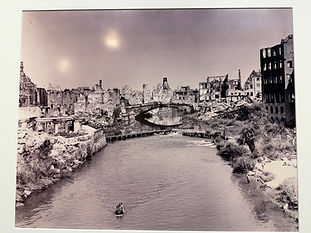
Founded in 2001, the Robert H. Jackson Center celebrates the enduring impact of the former Supreme Court Justice and chief U.S. prosecutor at the Nuremberg Trials who spent his life in and around Jamestown. Located downtown in a historic former mansion, the Center uses Jackson’s legacy to engage both youth and adults in conversations about constitutional rights, justice, and civic responsibility by offering free programs, school curricula, and community events. Today, the Center hosts thousands of visitors annually, and provides a welcoming space for community groups.

The Spark
A growing effort to honor Robert H. Jackson found its home in a vacant historic building in downtown Jamestown.
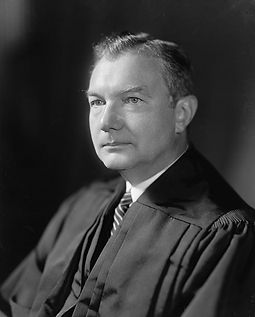

The development of the Jackson Center is an example of perfect timing: a program in need of a place, and a place in need of a program. In the mid‑1990s, local awareness was growing about the life of Robert Houghwout Jackson and his important legacy. Born in 1892 in rural Pennsylvania, Jackson grew up in nearby Frewsberg, NY, attended Jamestown High School for a postgraduate year, began reading law at 18 with the local firm Mott & Dean, and spent a year at Albany Law School. He returned to Jamestown, was admitted to the bar in 1913, and built a successful local practice representing local workers and companies while becoming active in Democratic Party.
The Gebbie Foundation, an organization that supports Jamestown development, wanted to ensure the city remember and honor Jackson’s legacy. Over the years, collaborators worked on various projects to honor him, eventually landing on the idea of an educational center. In late 2000, the Gebbie Foundation president presented the concept to local philanthropic leaders, who felt the idea needed a clearer direction. Nonetheless, after touring the vacant Masonic building, a place Jackson himself had often visited, a decision was made to purchase it as the future home of the Robert H. Jackson Center.
The Project
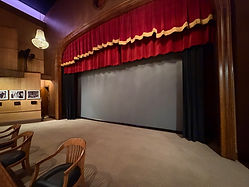
The Kent Mansion, built in 1859 as Jamestown’s first brick residence, was the home of Alonzo Kent, founder of the First National Bank of Jamestown. The grand home was the center of social life during the city’s industrial rise as the country’s second-largest furniture manufacturer and a major textile manufacturing center. The mansion’s design and evident craftsmanship reflect Jamestown’s strong architectural tradition that included figures like Charles D. Westmore, who later contributed to Grand Central Station. In 1920, the building was purchased by the Masons, who added a theater and banquet room by converting the former stables and carriage house. In 1993, the Masons moved to a smaller building nearby in a bid to save on maintenance costs. Meanwhile, the building sat empty.
In 2001, local philanthropists Carl Cappa, Betty Lenna, and Thomas Cardman, director of the Gebbie Foundation, purchased the site for $1.5 million and established it as the home of the Robert H. Jackson Center. The Jackson Society, made up of individual donors, contributed approximately $6 million between 2001 and 2005 to support restoration, operations, and programming.
When the building became the Jackson Center, a deliberate choice was made to not list the mansion in any historic registers. This allowed the Center’s leadership to maintain the flexibility required to modernize its infrastructure for modern public use while honoring its historic integrity. Early rehabilitation focused on removing Masonic partition walls, modernizing electrical systems and restoring original ornate ceiling plaster and custom woodwork that had been crafted by Jamestown’s furniture artisans more than a century before.
In 2016, the Center was included in Jamestown’s $10 million Downtown Revitalization Initiative (DRI) grant, and received $1.5 million of the $10 million award. This was used to add climate control and install an elevator. The completion of this project in 2020 made all floors of the building accessible.

Outcomes & Benefits
Today, the center attracts 15,000 visitors annually with a packed schedule of year-found programming. Operations are supported by the staff and a dedicated roster of volunteer docents.
The Center does not charge for any programming, and it invites local organizations, like the Jamestown Bar Association and the Chautauqua County Chamber of Commerce, to use the space for meetings. Since 2024, the center has welcomed new US citizens by hosting naturalization ceremonies, with over 100 people taking their oath in the auditorium.
The Center plays a significant role in supporting democratic engagement in Jamestown and the Western New York region, with programming that includes immigration, civil rights, women’s suffrage, constitutional literacy, and civic dialogue.
With an audience evenly split between adults and youth, the Center partners with Jamestown public schools to provide educational curriculum and sponsors the Robert H. Jackson Seminar on the Supreme Court of the United States, which takes place each summer at the Chautauqua Institute.


The efforts put into the renovations of the Kent Mansion are a tangible example of the Center’s goal to keep civic conversation accessible. For President Kristan McMahon, the vision for the center is to create “a world where the universal principles of equality, fairness and justice prevail”, and that informs every step they take as an organization.
Partnerships & Funding
The Robert H. Jackson Center’s growth and community impact are driven by a robust network of foundation partnerships, major individual donors, and educational collaborations. Capital funding for the historic Kent Mansion was anchored by generous contributions of $500,000 each from the Gebbie Foundation and board members Carl Cappa and Betty Lenna, the latter of whom also served as the Center's Director. Ongoing operations and programming are supported by significant long-term grants from individuals and regional funders, along with a $1.5 million Downtown Revitalization Initiative Grant in 2016. Individual philanthropy is championed by the Jackson Society, a dedicated group of donors contributing $1,000 or more annually. Beyond these foundational partnerships, the Center actively collaborates with Jamestown Schools to develop classroom materials. This educational reach expanded nationally in 2025 through "Jackson in a Box," an intern-created instructional kit designed to teach students everywhere about law, human rights, and Justice Jackson's enduring legacy. Reflecting this deep-rooted community trust, total charitable donations reached a record $3,328,705 in 2024, demonstrating a powerful upward trend in financial support.

Lessons Learned
LESSON 1
Historic structures once reserved for a select few can be democratized.
LESSON 2
Placekeeping strengthens community identity by honoring the multi-layered history of a site.

LESSON 3
Preservation can be flexible while still honoring a building’s history.

The Robert H. Jackson Center demonstrates how a historic private building can be transformed into a public civic institution that educates, inspires, and strengthens community identity and demonstrates that the voices of everyday people matter. While Jackson's life story is a powerful vehicle for that message, the historic mansion vividly tells the multi-layered story of Jamestown’s development during the early 1900s, stories that likely helped shape Jackson’s work.